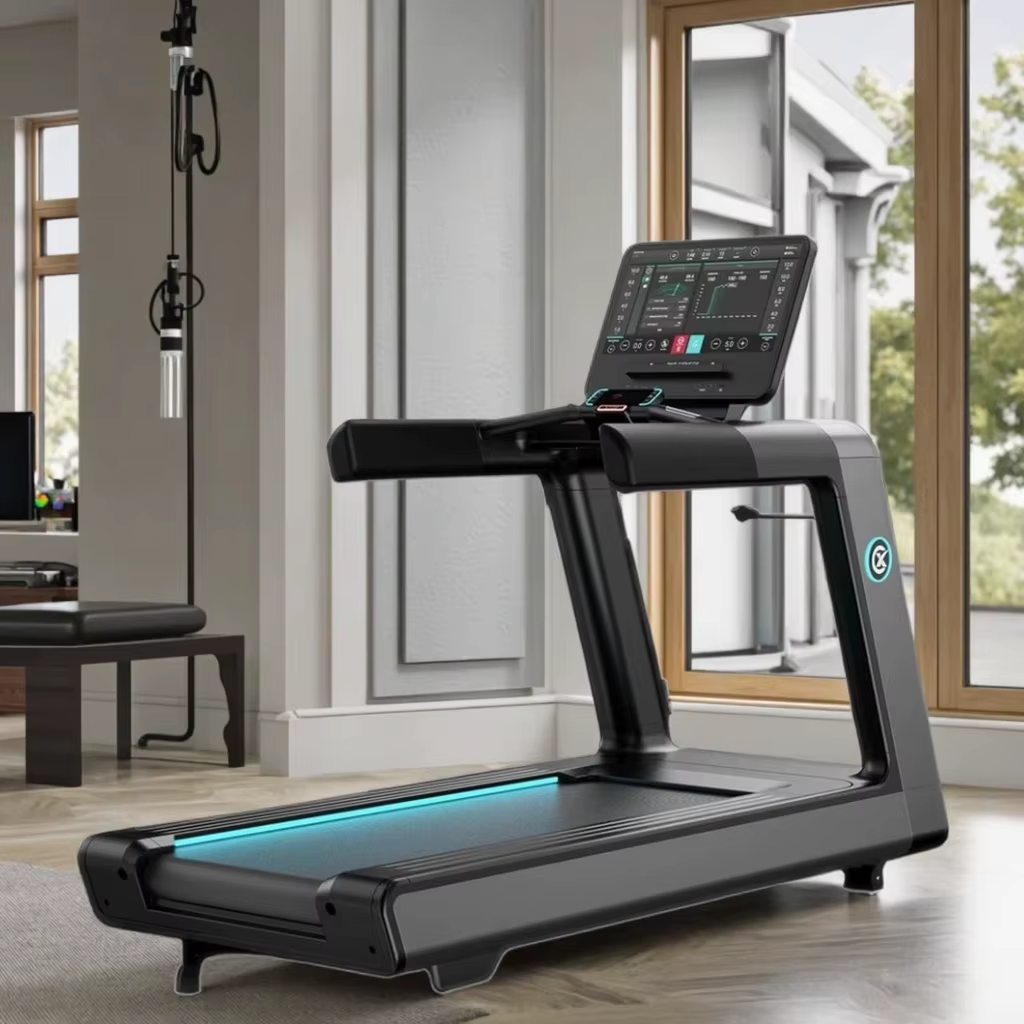
Comprehensive Safety Features Enabling Confident Independent Training
The extensive safety features integrated throughout well-engineered leg extension equipment establish it as one of the most secure strength training options available, enabling users to pursue ambitious training goals with confidence while minimizing injury risk factors that complicate other exercise modalities. The fundamental safety advantage stems from the fixed movement pathway that guides the resistance arm through a predetermined arc, eliminating the balance challenges and stabilization demands required when performing free weight exercises where maintaining control of external loads requires constant coordination and carries increased risk of losing control during moments of fatigue. The seated positioning inherent to leg extension equipment provides exceptional stability by supporting the torso against a padded backrest and securing the body within the machine framework, preventing the compensatory movements and postural breakdowns that frequently occur during standing leg exercises when primary movers become fatigued. This stable platform proves particularly valuable for older adults, rehabilitation patients, and novice exercisers who may lack the core strength or proprioceptive awareness necessary to safely execute complex movement patterns. The weight selection mechanisms incorporated into leg extension equipment include positive engagement systems where pins fully seat into weight stacks or plate retention systems that prevent unintended disengagement during exercise execution, eliminating the concerning possibility of sudden load drops that could cause injury. Many commercial-grade models feature shrouded weight stacks with perforated metal covers that prevent users from inadvertently placing hands or fingers into moving weight areas, addressing important safety considerations in busy gymnasium environments where distractions occur. The resistance arm positioning and range of motion limitations built into quality leg extension equipment respect natural joint mechanics by preventing hyperextension beyond safe anatomical limits, with adjustable stops that allow customization based on individual flexibility levels while protecting knee structures from excessive stress. Emergency disengagement features enable rapid resistance release in the unlikely event that users experience sudden pain or medical emergencies during exercise, with some advanced models incorporating electronic stop buttons or mechanical release levers positioned for immediate access. The non-slip surfaces applied to seat cushions and back pads prevent unwanted sliding during vigorous exercise execution, maintaining proper body positioning relative to the pivot axis throughout complete sets even when perspiration accumulates. Foot roller pad adjustments ensure secure lower leg positioning that distributes contact pressure appropriately while preventing the leg from slipping out from behind the resistance arm during forceful contractions. The structural integrity engineered into premium leg extension equipment through heavy-duty frame construction, reinforced pivot points, and certified welding standards ensures that the apparatus maintains stability and alignment even after years of intensive daily usage in commercial facilities. Regular maintenance requirements remain minimal compared to free weight alternatives that demand frequent inspection of barbells, clips, and plates for wear or damage, with leg extension equipment typically requiring only periodic lubrication of moving parts and inspection of upholstery condition to maintain optimal operational safety throughout extended service life.


 EN
EN